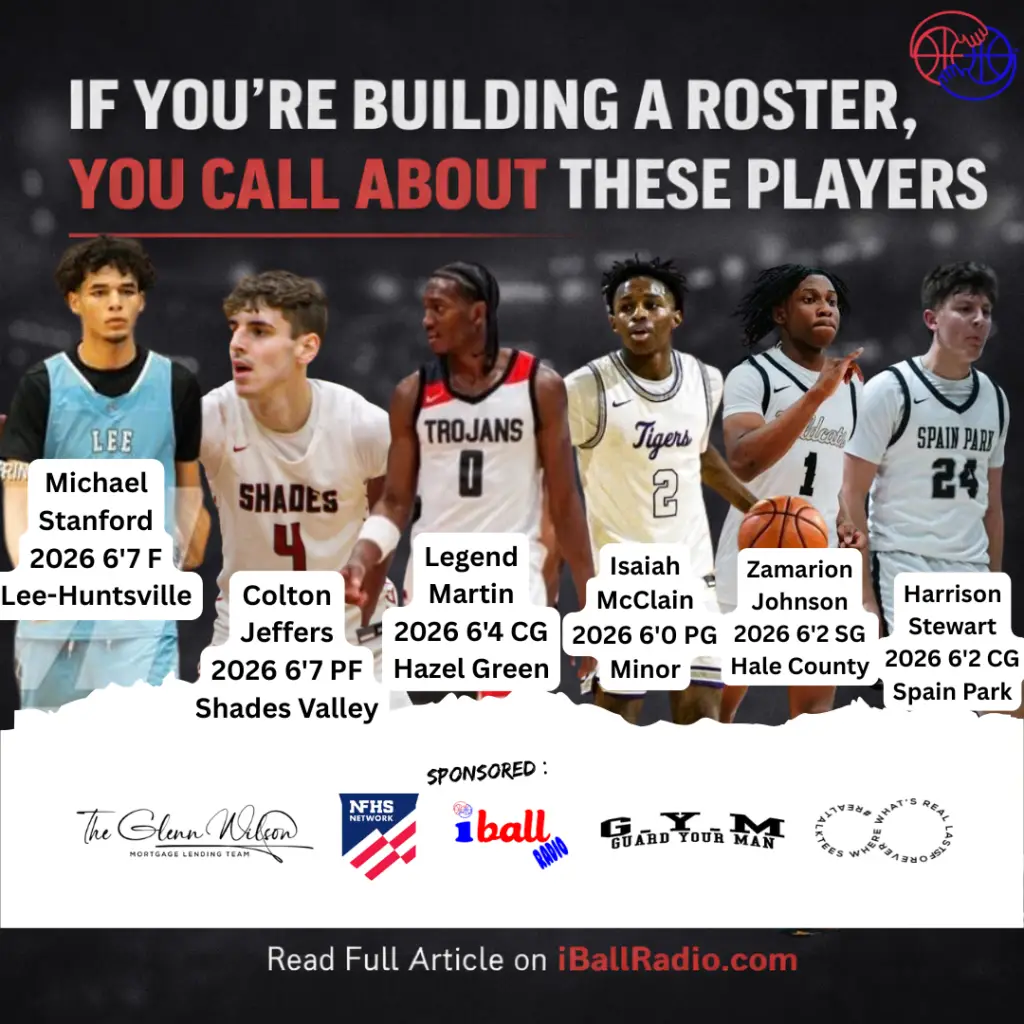
When college coaches build a roster, they’re not just stacking talent.
They’re balancing personalities, roles, timelines, and trust. They’re asking how pieces fit together — not just who looks good on paper.
This article looks at players through that exact lens: If you’re building a roster, who makes sense and why?
Roster Building Is About Fit
Talent might get your name mentioned early — but fit is what gets you offers.
In real roster conversations, coaches are weighing things that don’t always show up on film:
- Who is willing to compete every day, regardless of role?
- Who brings value even when minutes aren’t guaranteed?
- Who can handle not playing early and still stay engaged?
- Who helps the culture instead of hurting it?
Those answers often matter just as much as upside — especially when filling depth, rotation, and development spots.
If You’re Building a Roster, You Need…
Reliable Guards
Guards who take care of the ball, defend their position, and make others better are foundational pieces. Coaches value guards who understand pace, spacing, and decision-making.
Versatile Wings
Wings who can guard multiple positions, rebound their area, and score within the flow are premium roster pieces. They allow staffs to adjust lineups without sacrificing identity.
Forwards Who Translate
Forwards who run the floor, defend, rebound, and play within structure make roster construction easier. Production matters, but consistency matters more.
Player Evaluations
Isaiah McClain | 5’11 PG | Minor | Class of 2026
McClain is the definition of a floor general. He can score at all three levels, but more importantly, he controls tempo with his IQ on both ends of the floor. He understands when to push, when to settle a team, and how to manage possessions.
What makes McClain a roster call is his communication and reliability. He’s the type of guard who can come in and immediately shore up depth, stabilize second units, and give staffs confidence that the game will be played the right way. He fits multiple roster needs across multiple levels.
Legend Martin | 6’4 CG | Hazel Green | Class of 2026
Martin is a versatile guard who can compete physically from Day 1. He has the ability to score when needed, but he’s equally comfortable blending into the flow and impacting the game without forcing action.
From a roster-building standpoint, Martin checks important boxes: toughness, adaptability, and role acceptance. He’s a player you call about because he can fit next to different personnel and help a lineup function.
Zamarion Johnson | 6’0 CG | Hale County | Class of 2026
Johnson is a super athlete who plays well above the rim despite his size. He brings immediate offensive punch, especially as a high-volume three-point shooter, and thrives in transition.
Defensively, he plays passing lanes well and turns defense into offense in the open floor. Johnson is a roster call because he changes the pace of a game and adds athleticism that can swing momentum off the bench or in rotation minutes.
Colton Jeffers | 6’7 PF | Shades Valley | Class of 2026
Jeffers has good footwork around the basket and can finish with either hand. While he’s more of a long-term project, he provides valuable depth at the forward spot.
From a roster perspective, Jeffers is a development piece who can help stabilize the frontcourt while growing into a more consistent inside presence. He’s the type of player staffs invest in because of size, touch, and upside.
Michael Stanford | 6’7 F | Lee-Huntsville | Class of 2026
Stanford offers a true inside-out presence with length and skill. He can score around the basket, step out when needed, and gives lineups flexibility at the forward position.
With the right development, he has the tools to become an everyday contributor. At minimum, he profiles as a perfect roster filler — someone who can play minutes early, provide versatility, and grow into a larger role over time.
Harrison Stewart | 6’2 CG | Spain Park | Class of 2026
Stewart brings maturity, toughness, and the ability to handle pressure at the guard position. He competes daily, doesn’t shy away from physical play, and understands how to operate within structure.
As a roster piece, Stewart provides dependable depth and internal competition. He’s the type of guard staffs value because he raises the practice level and can be trusted when called upon.
DWill’s Thoughts
When I talk with college coaches about roster construction, the conversations are very clear — and very honest.
A lot of them stress the same things: unselfishness, competitiveness, and daily buy-in. They’re not just asking who can play; they’re asking who is willing to come in, compete every day, and earn everything.
Coaches consistently tell me they value players who don’t need promises. Guys who understand they might not play a lot as freshmen, but still show up, work, push teammates in practice, and stay ready. Players who are willing to compete without guarantees tend to earn trust — and that trust turns into opportunity over time.
When names come up in those conversations, it’s usually because a staff believes that player will help set the tone inside the program, not just fill a spot on the floor. That’s the lens this article is written.
Final Thoughts
Roster building isn’t about finding five stars — it’s about finding five that work.
The right pieces, in the right roles, with the right mindset will always outperform raw talent alone.